Flexible film pouches
Pouches and bags made from printed and laminated film with no woven layer — stand-up pouches, flat and pillow packs, vacuum and barrier formats, roll stock. They run on the same printing and lamination assets as our woven work, which is why we catalogue them. Bought by food, pet food and chemical packers. Barrier structure, not appearance, is what you are actually specifying.
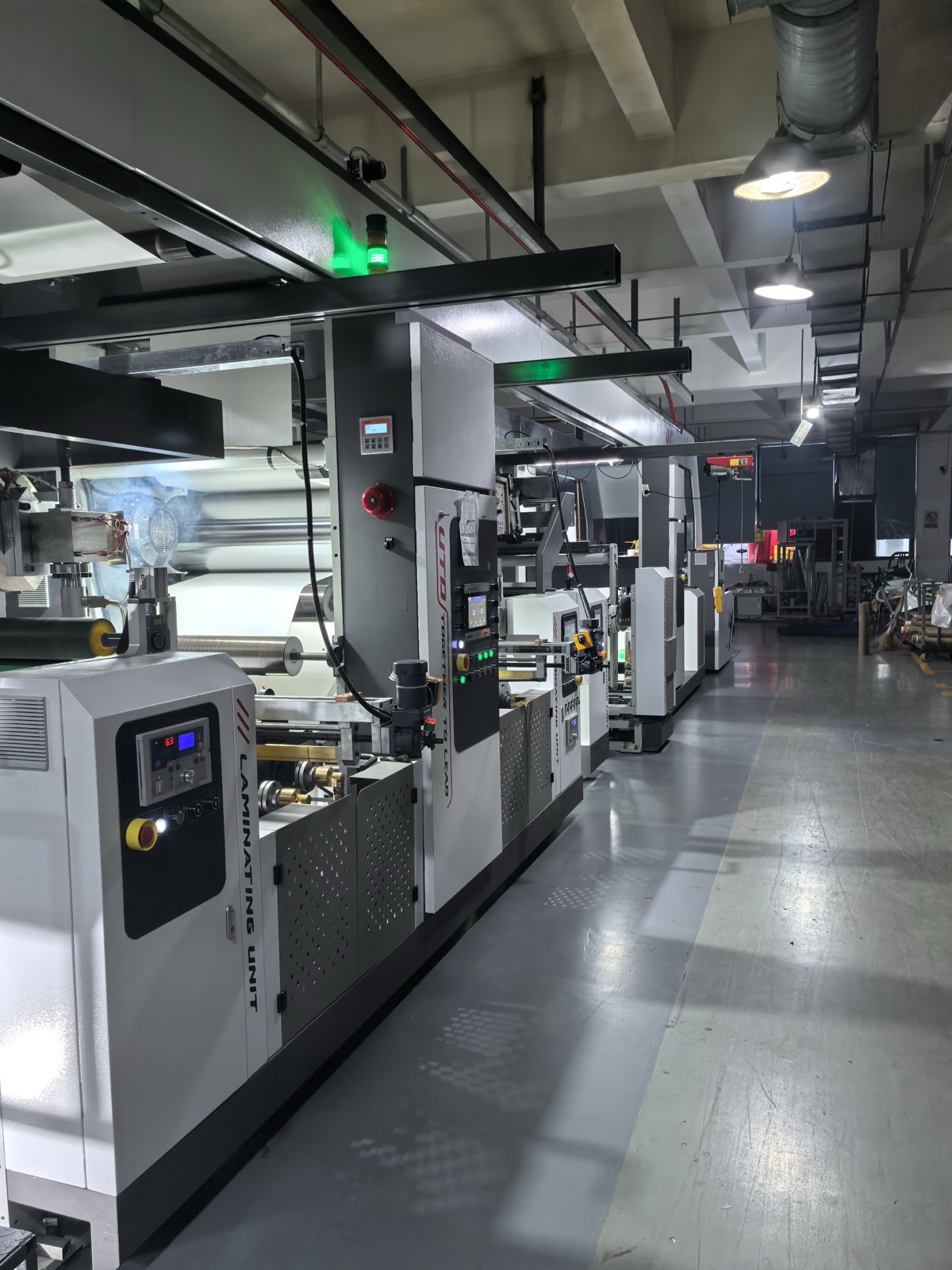
41 products across 11 subfamilies. 19 have every process they need evidenced across our plants, 14 more are made here with named bought-in components; the rest are marked Enquire rather than claimed.
Made in our plants every process this product needs is evidenced across our plants. Made here, part sourced we make it, with one or more bought-in components QC-ed by us — the product page names which. Enquire we have not evidenced every process it needs — ask, and we will tell you honestly whether we make it, source it, or decline. See honest limits.
Stand-up & flat-bottom pouches 4
-
Stand-up pouch / doypack Made here, part sourced
Processes roto-print · lamination · heat-seal · zipper-insert
-
Flat-bottom / quad-seal / eight-side-seal pouch Made here, part sourced
Box-shaped pouch built from a face web plus two separate gusset webs, sealed with eight seals (4 forming the flat base in a '井' pattern, 2 on each side gusset). Gives a genuinely rigid square base, 5 printable panels (front, back, 2 sides, bottom) and the highest fill-weight-to-footprint ratio of any pouch. Requires a dedicated eight-side-seal bag maker — a different, more expensive machine than a doypack maker.
Processes roto-print · lamination · heat-seal · zipper-insert · valve-insert
-
Side-gusset back-seal bag (coffee bag shape) Made here, part sourced
Processes roto-print · lamination · heat-seal · valve-insert · zipper-insert
-
Coffee bag with one-way degassing valve Made in our plants
Any of the above pouch formats fitted with a one-way silicone-oil valve that lets roast CO2 escape without admitting oxygen. Listed separately because it needs a valve applicator station (inline on the bag maker or an offline valve welder) and a leak/pressure test protocol — a distinct capability line item, not a printing variant.
Processes roto-print · lamination · heat-seal · valve-insert
Flat and pillow formats 4
-
Pillow / back-seal (fin or lap seal) bag and pillow roll Made in our plants
Processes roto-print · lamination · heat-seal
-
Three-side-seal pouch / sachet Made here, part sourced
Processes roto-print · lamination · heat-seal · zipper-insert
-
Four-side-seal pouch Made in our plants
Two separate webs sealed on all four edges. Unlike the three-side-seal there is no fold, so front and back can be entirely different materials or artworks (e.g. printed foil face + clear back). Fully hermetic and dimensionally stable; used where seal integrity matters more than shelf presence.
Processes roto-print · lamination · heat-seal
-
Stick pack / narrow back-seal sachet Made in our plants
A very narrow back-seal tube, typically 3-8× longer than wide, run on multi-lane stick machines. Physically a back-seal pillow but commercially and mechanically its own product: it needs narrow-web slitting to tight tolerance and it is bought by a different set of fillers.
Processes roto-print · lamination · heat-seal
Liquid and functional-fitment pouches 4
-
Spouted pouch Made in our plants
A stand-up, shaped or flat pouch with an injection-moulded fitment (spout + cap) welded into a seal — top-centre, corner, or side. Converts a bag into a dispensing package. Needs a spout welding station and 100% leak testing; the fitment is a bought-in part.
Processes roto-print · lamination · heat-seal
-
Retort pouch Made in our plants
A laminate engineered to survive autoclave sterilisation at 121 °C for 30-40 min (standard retort) or 135 °C for 15-20 min (high retort) under counter-pressure. Distinguished from ordinary pouches by the adhesive (two-component retort-grade PU, not standard PU), the sealant (RCPP/retort cast PP, not PE), and validated seal strength after cook. Physically can be flat three-side-seal, stand-up or spouted.
Processes roto-print · lamination · heat-seal
-
Microwave steam-vent pouch Made in our plants
A pouch with a pressure-release feature — an engineered weak seal, a laser-scored vent, or an applied steam valve — that opens at a defined internal pressure so the pack self-vents during microwaving instead of bursting. Enables steam-in-bag cooking.
Processes roto-print · lamination · heat-seal · valve-insert
-
Bag-in-box liner / aseptic bladder Made in our plants
A flexible barrier bladder with a welded tap or fitment that sits inside a corrugated outer case. Made from two or four plies of metallised or EVOH film, sealed on a bag maker with a fitment welder. Physically the same asset base as a spouted pouch but at much larger volumes and with an aseptic-grade option.
Processes roto-print · lamination · heat-seal
Vacuum and barrier formats 5
-
Nylon vacuum pouch Made in our plants
A high-puncture-resistance pouch built on a biaxially-oriented nylon (BOPA/PA) layer with a thick PE sealant, made for chamber or external vacuum sealing. Distinguished from ordinary pouches by the nylon layer (puncture and flex-crack resistance under vacuum) and by a heavier sealant to seal through product residue.
Processes roto-print · lamination · heat-seal
-
Vacuum heat-shrink barrier bag Made in our plants
A cross-linked, oriented multilayer barrier bag (PA/EVOH/PE or PVDC-based) that shrinks 15-25% when dipped in 85-92 °C water after vacuum sealing, wrapping tight to irregular product shapes. Different from a nylon vacuum pouch: it is a co-extruded oriented film, not a dry-laminate, and the shrink step is part of the packing process.
Processes roto-print · lamination · heat-seal
-
Aluminium-foil laminate pouch Made here, part sourced
A pouch containing a genuine rolled aluminium foil ply (7-12 µm), giving essentially zero light transmission and near-zero oxygen and moisture transmission. The reference standard for maximum barrier. Distinguished from metallised (vacuum-deposited) film, which has a barrier two to three orders of magnitude worse.
Processes roto-print · lamination · heat-seal · zipper-insert
-
Metallised (VMPET / VMCPP) barrier pouch Made here, part sourced
A pouch whose barrier comes from a vacuum-deposited aluminium layer (~30-50 nm) on PET or CPP rather than rolled foil. Roughly 90% of the shelf appeal of foil at 40-60% of the cost, with barrier good enough for 6-12 month shelf life. The commercial default for most Chinese food pouches.
Processes roto-print · lamination · heat-seal · zipper-insert
-
Moisture-barrier and ESD static-shielding bag Made here, part sourced
A foil or metallised laminate with a controlled surface resistivity, built for electronics: it blocks moisture (MBB) and, in the shielding grade, forms a Faraday cage around the contents. Sold with desiccant sachets and a humidity indicator card as a system.
Processes roto-print · lamination · heat-seal · zipper-insert
Closure and functional variants 2
-
Child-resistant zipper pouch Made here, part sourced
A stand-up or flat pouch fitted with a certified child-resistant closure — a press-and-slide slider, a two-hand-action zipper, or a peel-and-reclose CR label. The closure is a certified component and the finished pouch must be third-party tested; this is a compliance product, not a design variant.
Typical Certified to 16 CFR 1700.20 (US Poison Prevention Packaging Act) or ISO 8317 / EN 862; senior-friendly criteria also apply. Slider CR zippers add 4-8 mm to the header. Common sizes 90 × 150 mm to 200 × 300 mm; fill 1 g - 500 g. Structures: PET/VMPET/PE, MATT-PET/VMPET/PE, opaque white for light block. Requires a defined tear-notch above the CR zipper so the pouch cannot be opened around the closure.
Processes roto-print · lamination · heat-seal · zipper-insert
-
Wet-wipe pouch with reclosable flip lid Made in our plants
A flat or gusseted pouch with a die-cut dispensing aperture covered by an applied injection-moulded flip lid or a resealable label. Needs a lid applicator (or label applicator) station plus die-cutting registered to the print — a distinct converting capability.
Processes roto-print · lamination · heat-seal
Substrate variants 2
-
Kraft-paper laminated pouch Made here, part sourced
Any of the pouch formats above built with a kraft-paper outer ply instead of a plastic film outer, laminated to a barrier and sealant. Bought for its natural, recyclable look. Prints by flexo or gravure but with a different ink and drying setup than film.
Processes roto-print · flexo-print · lamination · heat-seal · zipper-insert · valve-insert
-
Frozen-food bag (cold-resistant laminate) Made here, part sourced
A pouch built with a low-temperature-impact-resistant sealant (mLLDPE or a nylon layer) that stays flexible and seal-intact at −18 to −40 °C, and that seals reliably through frost and product dust. Distinct from an ordinary pouch by the sealant grade and by contamination-tolerant seal design.
Processes roto-print · lamination · heat-seal · zipper-insert
Sustainable structures 3
-
Recyclable mono-material PE pouch (MDO-PE) Made here, part sourced
A pouch where every ply is polyethylene — typically machine-direction-oriented PE (MDO-PE) as the printable outer, laminated to a PE sealant, so the whole pack is ≥90% PE by weight and passes store-drop-off / CEFLEX recycling protocols. Requires a narrower process window than PET/PE because the outer and sealant are the same polymer family.
Processes roto-print · lamination · heat-seal · zipper-insert
-
Recyclable mono-material PP pouch (BOPP//CPP) Made here, part sourced
The polypropylene equivalent of the mono-PE pouch: BOPP outer laminated to a CPP sealant, everything in the PP stream. Higher heat resistance than mono-PE, so it takes hot-fill and even retort with the right grades, and it runs on existing bag makers with far less fuss. For a woven-sack plant this is the most natural sustainable structure because PP is already the house polymer.
Processes roto-print · lamination · heat-seal · zipper-insert · valve-insert
-
Compostable / biodegradable pouch Made here, part sourced
A pouch built entirely from certified compostable substrates — cellulose film, PLA, PBAT, paper — so the whole pack disintegrates in industrial (or, for some certifications, home) composting. Requires compostable adhesives and inks as well as compostable films; a conventional PU adhesive voids the certification.
Typical Structures: cellulose (NatureFlex-type) / PLA, kraft / PLA, PLA / PBAT, metallised-cellulose / PLA for barrier. Total 90-160 µm. Certifications: EN 13432, ASTM D6400, BPI (US), TÜV OK Compost INDUSTRIAL / HOME, GB/T 38082 and GB/T 19277 (China), AS 4736 (Australia). Disintegration ≥90% in 12 weeks, biodegradation ≥90% in 180 days at 58 °C. Barrier is the limitation: OTR typically 10-100 cc/m²·day, WVTR 5-20 g — real shelf life 3-9 months, not 18.
Processes roto-print · lamination · heat-seal · zipper-insert · valve-insert
Format variants 2
-
Shaped / contour die-cut pouch Made in our plants
A pouch whose outline is cut to a non-rectangular contour by a rotary die on the bag maker — bottle shapes, character shapes, integral handles, curved shoulders. Distinct product because it needs a custom rotary die per shape plus a matched seal profile, and reject rates run higher.
Processes roto-print · lamination · heat-seal
-
Handle pouch (reinforced carry pouch) Made here, part sourced
A large-format pouch (usually eight-side-seal or stand-up) with an applied or die-cut carrying handle rated to the filled weight. The handle attachment — welded plastic handle, riveted rope handle, reinforced punch hole, or side-gusset carry slot — is a separate machine station and a load-rated element.
Processes roto-print · lamination · heat-seal · zipper-insert · webbing-attach
Roll stock 4
-
Printed VFFS / HFFS roll stock (rollfilm) Made in our plants
Printed and laminated film supplied as slit rolls rather than made-up bags, for customers who form, fill and seal on their own vertical or horizontal form-fill-seal machines. Commercially the highest-value use of a gravure press and laminator because it skips bag making entirely — press hours convert straight to shipped tonnes.
Processes roto-print · lamination
-
Thermoforming bottom web and top web Made in our plants
A matched pair of films for thermoform-fill-seal (TFFS) machines: a thick formable bottom web that is heated and drawn into a cavity, plus a thinner top web that seals over it. A distinct roll-stock product because the bottom web must have controlled draw ratio and thickness distribution, not just barrier.
Processes roto-print · lamination
-
Lidding and easy-peel sealing film Enquire
Printed film supplied as roll stock or as pre-die-cut lids, heat-sealed onto rigid cups, trays and tubs. Its defining property is a controlled peel force at the seal interface — engineered to open cleanly by hand without tearing and without leaving fibre.
Processes roto-print · lamination · coating
-
Twist-wrap and flow-wrap confectionery film Enquire
Narrow printed film for candy wrapping — either twist film with high dead-fold (it holds a twist without springing back) or flow-wrap film for pillow-wrapped confectionery. Dead-fold is the defining, non-obvious property and it rules out most standard films.
Processes roto-print · lamination · coating
Labels and sleeves 5
-
Heat-shrink sleeve label Made in our plants
A printed film tube slipped over a container and shrunk with steam or hot air to conform to its contours, giving 360° decoration including compound curves. Reverse-printed by rotogravure on the inside of the film (so the print is protected by the film itself), then solvent-seamed into a lay-flat tube, slit and rewound. A pure gravure-press product with a seaming machine bolted on — the natural label entry point for a converter that already owns a roto press.
Processes roto-print
-
Tamper-evident cap / neck shrink band Made in our plants
A narrow shrink tube applied over a closure and neck, shrunk to lock the cap and show tampering. Made on the same gravure + seaming line as a shrink sleeve but slit to a narrow width and perforated for opening — sold to a different buyer (usually the filler, not the brand's design team) and often plain rather than printed.
Processes roto-print
-
In-mould label (IML) Made in our plants
A pre-printed, die-cut polypropylene label that a robot places into an injection or blow mould before the shot; the molten resin fuses it into the container wall so label and container become one PP part. A print-and-die-cut product with no adhesive and no application step at the brand — sold to the moulder, not the brand owner.
Processes roto-print · flexo-print
-
Pressure-sensitive (self-adhesive) label roll Enquire
Printed face stock coated with adhesive on a release liner, die-cut into labels and rewound. Included in this family because it is printed and die-cut on the same gravure or flexo line, sold to the same buyers, and is the default label format a converter is asked for alongside pouches and sleeves.
Processes roto-print · flexo-print · screen-print · coating
-
Wrap-around and stretch sleeve label (non-adhesive) Made in our plants
Two closely-related non-adhesive label formats. Wrap-around: a printed OPP or PET film cut from a reel, wrapped around a cylindrical container and closed with two hot-melt glue lines (leading edge tacked, trailing edge lapped). Stretch sleeve: a thick LDPE tube stretched open, dropped over the container and released so it grips by elastic recovery — no heat, no glue, no shrink tunnel.
Processes roto-print · flexo-print
E-commerce mailers 6
-
Courier poly mailer Enquire
A co-extruded polyethylene envelope with a permanent hot-melt self-seal strip, used as the outer shipping pack for e-commerce parcels. Printed flexo (or gravure for brand work), made on a bag machine with an adhesive-tape applicator. Made in enormous volume in China and a natural high-tonnage sideline for a plant with print and bag-making capacity.
Processes flexo-print · roto-print · heat-seal · coating
-
Biodegradable / compostable courier mailer Enquire
The same envelope format built from certified compostable resin (PBAT + PLA + starch blends) rather than PE. A distinct product because the resin runs differently on the blown-film line and the bag machine (lower melt strength, lower seal temperature, shorter shelf life) and because the sale is entirely driven by certification.
Typical Resin: PBAT/PLA blend, typically 60-80% PBAT with 15-30% PLA and optional starch. Thickness 60-100 µm (thicker than PE for the same strength — PBAT is weaker). Certifications: EN 13432, ASTM D6400, GB/T 38082 (China's express-mailer-specific degradable standard), TÜV OK Compost, BPI. Disintegration ≥90% in 12 weeks; biodegradation ≥90% in 180 days. Shelf life 12-18 months in dry storage — the film degrades on the shelf, which must be stated. Tensile ~15-20 MPa, noticeably lower than PE.
Processes flexo-print · heat-seal · coating
-
Bubble mailer / bubble envelope Enquire
A cushioned shipping envelope: an air-bubble film inner laminated to an outer web (pearlised CPE film, kraft paper, or aluminised film), converted on a bag machine with a self-seal adhesive strip. The bubble film itself is co-extruded and formed on a bubble-forming line; the converter typically buys bubble film and laminates + converts.
Processes flexo-print · lamination · heat-seal · coating
-
Air-column / inflatable cushioning bag Made in our plants
A co-extruded nylon/PE film with integral one-way air valves formed by a pattern-printed heat-seal-resist, so a row of independent air columns can be inflated at the packing station and each column seals itself. Included here because the valve pattern is applied by gravure printing of a heat-resist ink — literally a gravure press job — and it is converted on heat-seal equipment.
Processes roto-print · heat-seal
-
OPP self-adhesive garment / display bag Enquire
A clear, high-gloss BOPP or OPP bag with a lip carrying a self-adhesive strip, used to bag apparel, printed matter and retail goods. Enormous volume in China. Made from a single-ply film on a bag machine with a tape applicator; printed flexo or gravure with brand marks and mandatory suffocation warnings.
Processes flexo-print · roto-print · heat-seal · coating
-
Document-enclosed / packing-list pouch Enquire
A small PE pouch with a pressure-sensitive adhesive back and a peelable or slit opening, stuck to the outside of a carton or pallet to carry the packing list, invoice or waybill. Printed 'PACKING LIST ENCLOSED' or 'DOCUMENTS ENCLOSED' by flexo. Simple, high-volume, and sold to the same logistics buyers as poly mailers.
Processes flexo-print · heat-seal · coating